On this blog, yours truly, Emi Iyalla shares, opines, explains, or analyses subjects both topical and timeless, profound and peculiar, with uncommon clarity and brevity.
The goal is to share good stuff. All posts are true, unless otherwise stated and only reputable articles are shared here.
Happy reading.
Thursday, July 31, 2014
4 Myths About Apple Design, From An Ex-Apple Designer
What's life really like designing for Apple? An alum shares what he learned during his seven years in Cupertino.
Apple is synonymous with upper echelon design, but very little is known about the company's design process. Most of Apple's own employees aren't allowed inside Apple's fabled design studios. So we're left piecing together interviews, or outright speculating about how Apple does it and what it's really like to be a designer at the company.
Enter Mark Kawano. Before founding Storehouse,
Kawano was a senior designer at Apple for seven years, where he worked
on Aperture and iPhoto. Later, Kawano became Apple's User Experience
Evangelist, guiding third-party app iOS
developers to create software that felt right on Apple's platforms.
Kawano was with the company during a critical moment, as Apple released
the iPhone and created the wide world of apps.
In an interview with Co.Design, Kawano spoke frankly about his time
at Apple--and especially wanted to address all the myths the industry
has about the company and about its people.
Myth #1
Apple Has The Best Designers
"I think the biggest misconception is this belief that the reason
Apple products turn out to be designed better, and have a better user
experience, or are sexier, or whatever . . . is that they have the best
design team in the world, or the best process in the world," Kawano
says. But in his role as user experience evangelist, meeting with design
teams from Fortune 500 companies on a daily basis, he absorbed a deeper
truth.
"It's actually the engineering culture, and the way the organization
is structured to appreciate and support design. Everybody there is
thinking about UX and design, not just the designers. And that's what
makes everything about the product so much better . . . much more than
any individual designer or design team."
It has often been said that good design needs to start at the
top--that the CEO needs to care about design as much as the designers
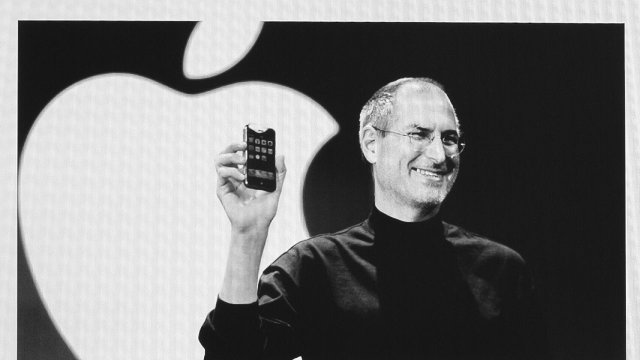
themselves. People often observe that Steve Jobs
brought this structure to Apple. But the reason that structure works
isn't because of a top-down mandate. It's an all around mandate.
Everyone cares.
"It's not this thing where you get some special wings or superpowers
when you enter Cupertino. It's that you now have an organization where
you can spend your time designing products,
instead of having to fight for your seat at the table, or get
frustrated when the better design is passed over by an engineering
manager who just wants to optimize for bug fixing. All of those things
are what other designers at other companies have to spend a majority of
their time doing. At Apple, it's kind of expected that experience is
really important."
Kawano underscores that everyone at Apple--from the engineers to the
marketers--is, to some extent, thinking like a designer. In turn, HR
hires employees accordingly. Much like Google hires employees that think
like Googlers, Apple hires employees that truly take design into
consideration in all of their decisions.
"You see companies that have poached Apple designers, and they come
up with sexy interfaces or something interesting, but it doesn't
necessarily move the needle for their business or their product. That's
because all the designer did was work on an interface piece, but to have
a really well-designed product
in the way Steve would say, this 'holistic' thing, is everything. It's
not just the interface piece. It's designing the right business model
into it. Designing the right marketing and the copy, and the way to
distribute it. All of those pieces are critical."
Myth #2
Apple's Design Team Is Infinite
Facebook has hundreds of designers. Google may have 1,000 or more.
But when Kawano was at Apple, its core software products were designed
by a relatively small group of roughly 100 people.
"I knew every one of them by face and name," Kawano says.
For the most part, Apple didn't employ specialist designers. Every
designer could hold their own in both creating icons and new interfaces,
for instance. And thanks to the fact that Apple hires design-centric
engineers, the relatively skeleton design team could rely on engineers to begin the build process on a new app interface, rather than having to initiate their own mock-up first.
Of course, this approach may be changing today.
"For Apple, having a small, really focused organization made a lot of
sense when Steve was there, because so many ideas came from Steve. So
having a smaller group work on some of these ideas made sense," Kawano
says. "As Apple shifted to much more of a company where there's multiple
people at the top, I think it makes sense that they're growing the
design team in interesting ways."
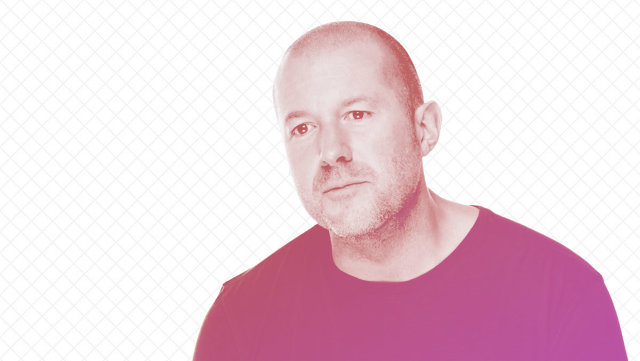
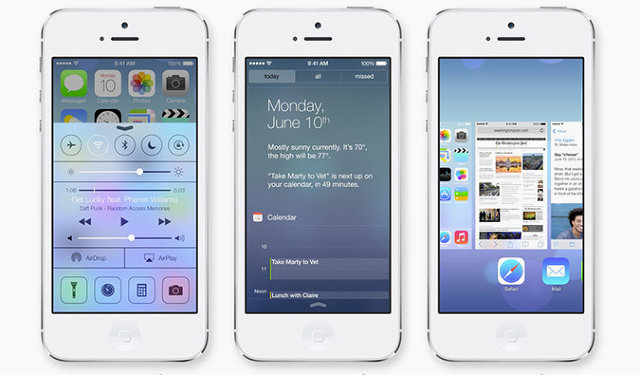
Notably, Jony Ive, who now heads usability across hardware and software, is reported to have brought in some of the marketing team to help redesign iOS 7.
It's a coup, when you think about it, for marketers to be deep in the
trenches with designers and engineers. (That level of collaboration is
frankly unprecedented in the industry.)
Myth #3
Apple Crafts Every Detail With Intention
Apple products are often defined by small details, especially those
around interaction. Case in point: When you type a wrong password, the
password box shakes in response. These kinds of details are packed with
meaningful delight. They're moments that seem tough to explain logically
but which make sense on a gut level.
"So many companies try to mimic this idea . . . that we need to come
up with this snappy way to do X, Y, and Z. They're designing it, and
they can't move onto the next thing until they get a killer animation
or killer model of the way data is laid out," Kawano explains. The
reality? "It's almost impossible to come up with really innovative
things when you have a deadline and schedule."
Kawano told us that Apple designers (and engineers!) will often come up with clever interactive ideas--like 3-D
cube interfaces or bouncy physics-based icons--during a bit of their
down time, and then they might sit on them for years before they make
sense in a particular context.
"People are constantly experimenting with these little items, and
because the teams all kind of know what other people have done, once a
feature comes up--say we need a good way to give feedback for a
password, and we don't want to throw up this ugly dialog--then it's
about grabbing these interaction or animation concepts that have just
been kind of built for fun experiments and seeing if there's anything
there, and then applying the right ones."
But if you're imagining some giant vault of animation ideas hiding
inside Apple and waiting to be discovered, you'd be wrong. The reality,
Kawano explains, was far more bohemian.
"There wasn't a formalized library, because most of the time there
wasn't that much that was formalized of anything that could be stolen,"
Kawano says. "It was more having a small team and knowing what people
had worked on, and the culture of being comfortable sharing."
Myth #4
Steve Jobs's Passion Frightened Everyone
There was a commonly shared piece of advice inside Apple--maybe
you've heard it before--that a designer should always take the stairs,
because if you met Steve Jobs in the elevator, he'd ask what you were up
to. And one of two things would happen:
1. He'd hate it, and you might be fired.
2. He'd love it, the detail would gain his attention, and you'd lose
every foreseeable night, weekend, and vacation to the project.
Kawano laughs when he tells it to me, but the conclusion he draws is more nuanced than the obvious Catch 22 punchline.
"The reality is, the people who thrived at Apple were the people who
welcomed that desire and passion to learn from working with Steve, and
just really were dedicated to the customer and the product. They were
willing to give up their weekends and vacation time. And a lot of the
people who complained that it wasn't fair . . . they didn't see the
value of giving all that up versus trying to create the best product for
the customer and then sacrificing everything personally to get there."
"That's where, a lot of times, he would get a bad rap, but he just
wanted the best thing, and expected everyone else to want that same
thing. He had trouble understanding people who didn't want that same
thing and wondered why they'd be working for him if that was the case. I
think Steve had a very low tolerance for people who didn't care about
stuff. He had a very hard time understanding why people would work in
these positions and not want to sacrifice everything for them."
As for Kawano, did he ever get an amazing piece of advice, or an incredible compliment from Jobs?
"Nothing personally," he admits, and then laughs. "The only thing
that was really positive was, in the cafeteria one time, when he told me
that the salmon I took looked really great, and he was going to go get
that."
"He was just super accessible. I totally tried to get him to cut in
front of me, but he'd never want do anything like that. That was
interesting too, he was super demanding . . . but when it came to other
things, he wanted to be very democratic, and to be treated like everyone
else. And he was constantly struggling with those roles."



No comments:
Post a Comment